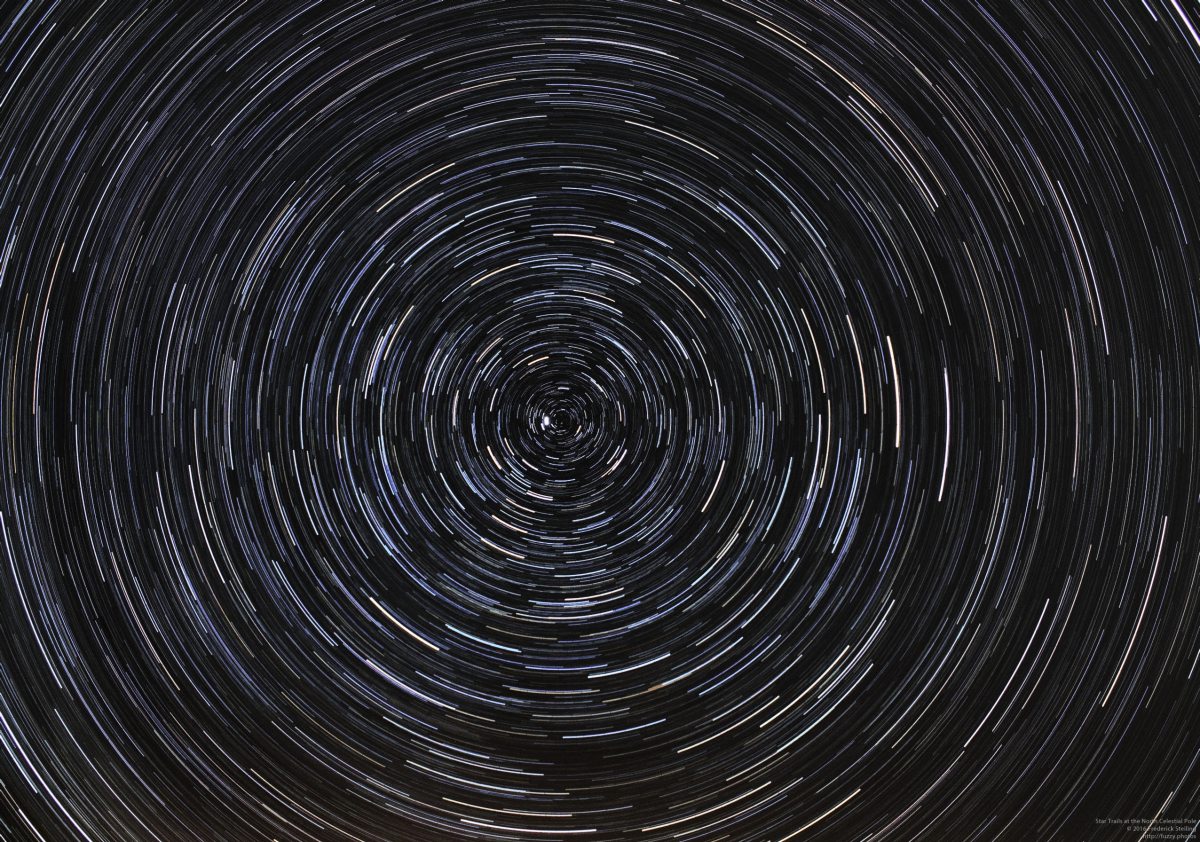
When we go stargazing, the first task is, of course, to determine the direction. In the Northern Hemisphere, Polaris in the constellation Ursa Minor is famous for marking the spot that is due north. When we observe the sky for a while, we will find Polaris holding nearly still in our sky while the entire northern sky moves around it in a counterclockwise direction.
Why does the Polaris appear to be fixed at the north celestial pole, the point around which the entire northern sky turns? Due to the Earth's rotation, we observe stars rising in the east and setting in the west. However, the Polaris appears still, because it’s located very close to the north celestial pole. If we conduct a simple demonstration by aiming the camera at the northern sky and taking a long-exposure photograph, the center of the star trails in the photo will be the Polaris.
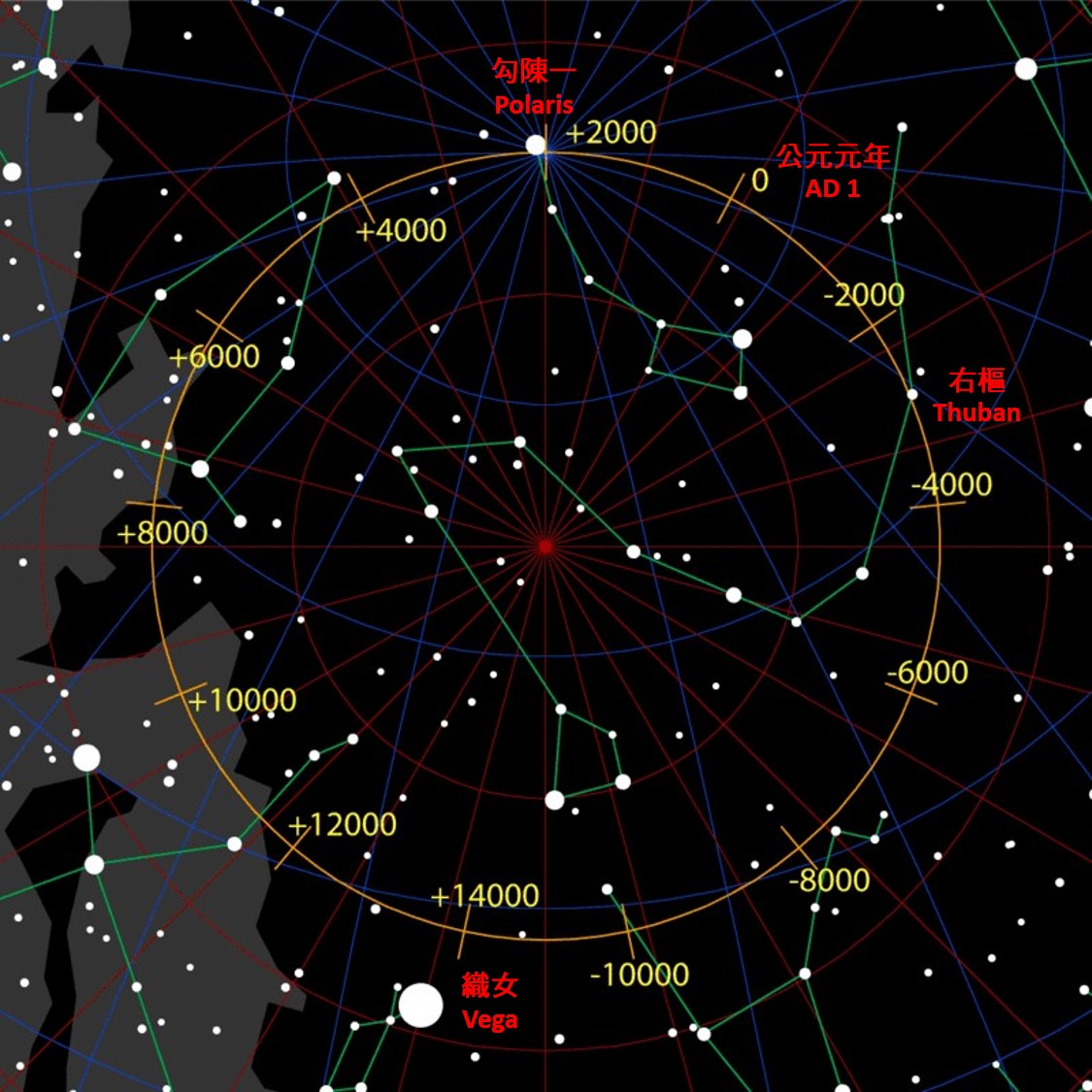
Polaris hasn’t always been the North Star and won’t remain the North Star forever. In fact, the Earth’s rotational axis traces a circle in the sky with a cycle of approximately 26,000 years, similar to how the axis of rotation of a spinning top rotates. It is called precession. Because of precession, the North Star is taken turns by stars near the moving north celestial pole. In 3,000 BC, the star Thuban in the constellation Draco was the North Star. Now, it is Polaris to be the North Star. And 12,000 years later, the star Vega in the constellation Lyra will be the North Star, while Thuban will once again be the North Star after 21,000 years. The Egyptians built the pyramids with one facade facing the past North Star. If you visit the pyramids at night, you can try to find direction by locating Thuban.