


Both “Mid-Autumn” and “Autumn Equinox” refers to the midpoint of autumn. Have you ever wondered why the Mid-Autumn Festival and the Autumn Equinox do not fall on the same day?
22 Sep marked the Autumn Equinox this year, one of the twenty-four solar terms. On this day, the Sun shines almost directly over the Earth’s equator, resulting in nearly equal lengths of day and night, with the Sun rising due east and setting due west. Following the Autumn Equinox, days begin to shorten and nights lengthen in the northern hemisphere, signaling the gradual onset of winter, including Hong Kong. This phenomenon is linked to the Sun’s movement and is calculated according to the Gregorian calendar, similar to the Winter Solstice. Therefore, the Autumn Equinox typically occurs around 22 Sep each year.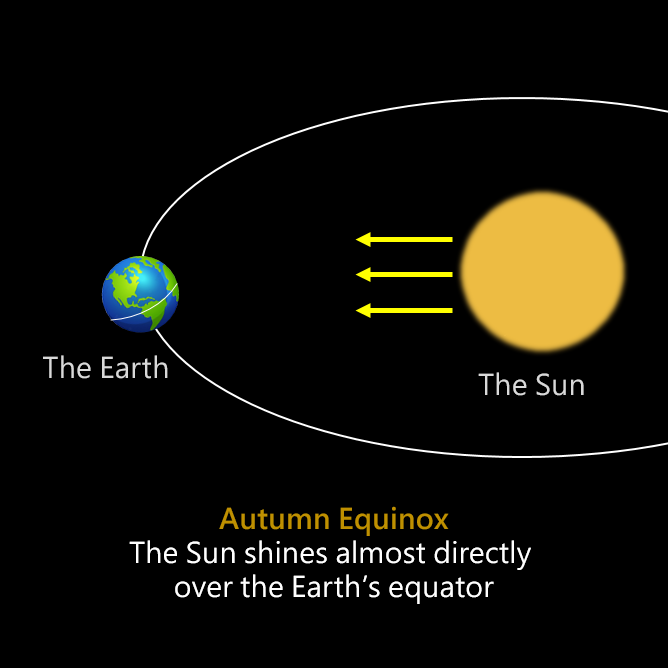
However, the Mid-Autumn Festival falls on the fifteenth day of the eighth month of the Chinese lunar calendar. On this day, the moon and the Sun are positioned on opposite sides of the Earth, resulting in a fully or nearly fully illuminated moon as seen from the Earth. This allows us to admire the stunning sight of the bright moon hanging in the sky. Since the festival follows the lunar calendar, its corresponding date in the Gregorian calendar changes each year.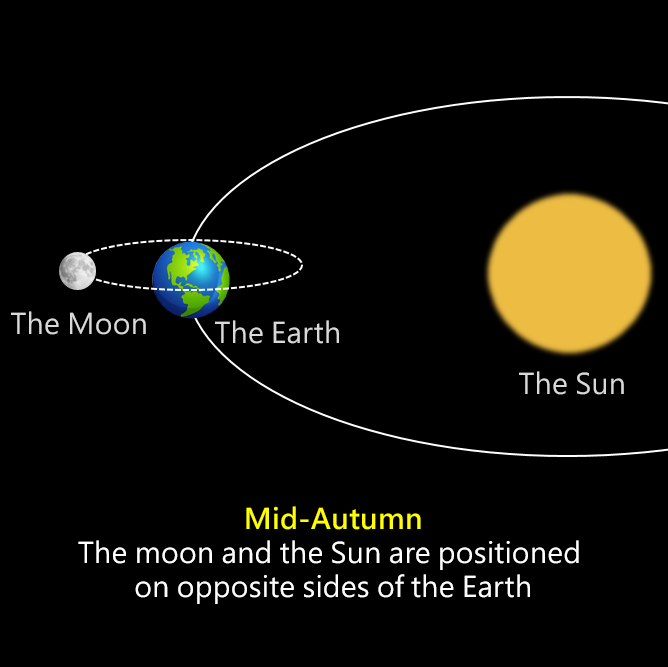
There’s a popular ancient saying: "If Mid-Autumn occurs before Autumn Equinox, it will be a disaster year; if it occurs after, there will be an abundant harvest." However, crop yield is influenced by many factors, and there is no scientific evidence to support the idea that the timing of the Mid-Autumn Festival affects agricultural outcomes.